Discover the history of PESCO, its role in electricity distribution across Khyber Pakhtunkhwa
The Peshawar Electric Supply Company (PESCO) is one of the most important pillars of Pakistan’s power distribution system, serving millions of consumers across Khyber Pakhtunkhwa (KPK). If you live in this region, chances are your electricity supply comes through PESCO’s vast network of grid stations, transmission lines, and distribution systems.
But PESCO isn’t just a power company—it’s a key player in powering homes, businesses, and industries that keep KPK moving forward. From the bustling streets of Peshawar to the remote valleys of Swat and Hazara, PESCO’s role in providing reliable electricity distribution is vital for everyday life and economic growth.
Understanding the history of PESCO and its role in electricity supply is important because it gives us insight into how energy infrastructure has evolved in KPK and the challenges this organization faces in keeping the lights on for millions of people. This journey also highlights how PESCO is adapting to modern demands, smart metering, and digital customer services to improve the power sector for the future.
✅ Latest portal for quick and easy PESCO online bill check
Origins of PESCO
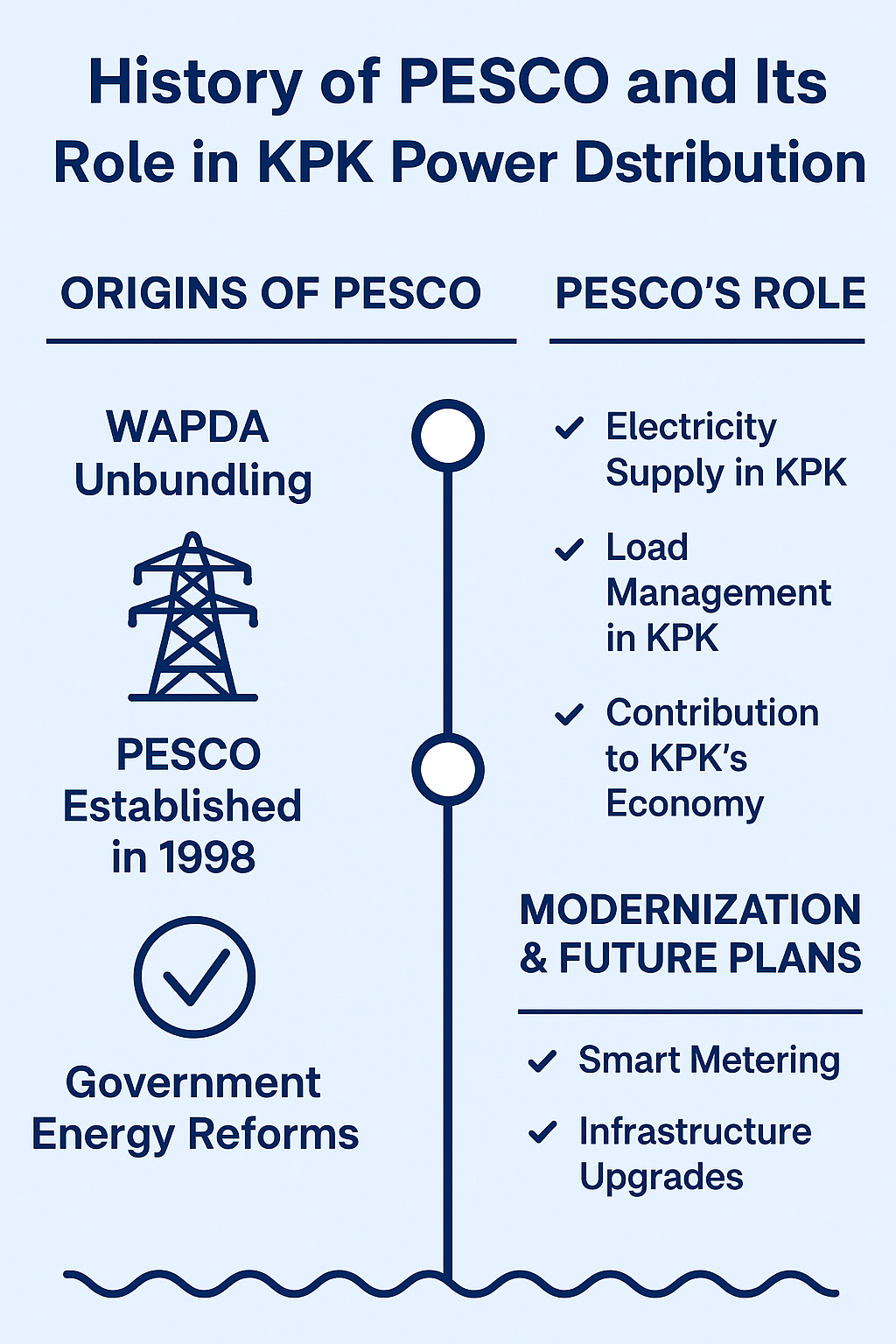
The story of Peshawar Electric Supply Company (PESCO) begins with the restructuring of WAPDA (Water and Power Development Authority) in the late 1990s. At that time, Pakistan’s power sector was undergoing major changes to improve electricity distribution and make the system more efficient.
To achieve this, the Government of Pakistan introduced energy sector reforms, breaking WAPDA into separate companies. These new companies were called DISCOs (Distribution Companies), and each was responsible for managing electricity supply in its specific region. This was a big step towards modernizing the Pakistan energy sector and improving customer service.
As part of these reforms, PESCO was officially established in 1998. Its main goal was to handle electricity distribution in Khyber Pakhtunkhwa, ensuring that both urban and rural areas received reliable power. Since then, PESCO has grown into one of the largest distribution companies in the country, managing thousands of kilometers of transmission lines and serving millions of consumers across the province.
The creation of PESCO was not just about organizational change—it was about bringing better control, transparency, and efficiency to power supply in KPK. Over the years, the company has continued to evolve, embracing modern technology, smart systems, and customer-centric solutions to meet the growing energy needs of the region.
➡️ PESCO industrial consumers can check monthly bills online hassle-free
Evolution and Growth of PESCO
Since its inception, PESCO has witnessed remarkable progress in building a strong and reliable electricity distribution system across Khyber Pakhtunkhwa. From day one, the company has focused on expanding its grid stations and transmission networks to meet the growing energy demand of both urban and rural areas.
One of the major achievements in PESCO’s journey has been its commitment to power infrastructure development. Over the years, new grid stations, transmission lines, and distribution networks have been added to strengthen the system and ensure an uninterrupted supply of electricity.
To bridge the gap between urban vs rural electrification, PESCO has launched multiple projects to provide power access to remote areas. Villages that once relied on kerosene lamps now benefit from a stable electricity supply, improving living standards and supporting economic growth.
Another important milestone in PESCO’s growth story is its involvement in hydropower projects and the adoption of modern infrastructure technologies. These initiatives not only improve efficiency but also reduce dependency on costly fuel-based energy. Additionally, PESCO continues to introduce advanced solutions for load management in KPK, minimizing outages and optimizing power distribution for homes, businesses, and industries.
Today, PESCO stands as a vital backbone of the region’s energy sector, combining traditional power systems with modern technologies to meet the rising demands of a growing population.
PESCO’s Operational Structure
The Peshawar Electric Supply Company (PESCO) operates through a well-defined structure to manage its vast distribution network across Khyber Pakhtunkhwa. Its headquarters is located in Peshawar, which serves as the central hub for planning, management, and monitoring of all electricity supply operations.
PESCO’s service area is divided into several regions to ensure efficient power distribution and quick response to consumer needs. These operational areas include Peshawar, Mardan, Swat, Hazara, Bannu, Khyber, and Dera Ismail Khan, covering both urban centers and rural communities. Each region has dedicated offices and staff responsible for managing local power supply and handling customer queries.
Currently, PESCO serves millions of electricity consumers across KPK, from residential households to large-scale industries. With a growing population and rising demand, the company continues to expand its distribution networks to provide uninterrupted electricity and improve service reliability.
This structured approach allows PESCO to maintain control over its vast coverage area while ensuring that every consumer—whether in a major city or a remote village—receives access to essential power services.
➡️ Find out your expected PESCO Electricity bill for different tariff slabs
Role of PESCO in KPK Power Distribution
The Peshawar Electric Supply Company (PESCO) plays a crucial role in maintaining a stable and reliable electricity supply in KPK. Its responsibility goes beyond simply delivering power—it ensures that residential consumers, businesses, and industrial units receive the energy they need to function efficiently.
To keep the power flowing, PESCO follows strict energy distribution policies that prioritize fair allocation of electricity across different sectors. From lighting up homes in urban neighborhoods to powering factories that drive the province’s economy, PESCO is the backbone of Khyber Pakhtunkhwa’s energy infrastructure.
One of the biggest challenges in the region is managing demand during peak hours. PESCO addresses this through advanced load management strategies in KPK, which help reduce load shedding and maintain system stability. By balancing supply and demand, PESCO ensures that consumers face fewer disruptions and businesses can operate smoothly.
The company’s contribution to industrial and domestic power needs cannot be overstated. Industries rely on consistent power to maintain production, while households depend on an uninterrupted supply for daily life. By meeting these needs, PESCO directly supports the economic growth of KPK and improves the quality of life for millions of people.
Challenges Faced by PESCO
Despite its vital role in powering Khyber Pakhtunkhwa, PESCO faces several challenges that affect its overall efficiency and service quality. One of the major issues is technical and non-technical losses, which occur due to outdated equipment, poor infrastructure, and electricity theft. These losses not only disrupt the power supply but also create financial burdens for the company.
Electricity theft and billing issues remain another serious challenge. Many areas experience problems related to unauthorized connections and delays in bill payments, which directly impact revenue collection. To address this, PESCO is working to improve its consumer billing and metering systems, introducing digital solutions for accurate billing and transparency.
Infrastructure limitations are also a significant concern, especially in remote rural areas of KPK. Many villages are located in mountainous regions, making it difficult to lay transmission lines and maintain distribution networks. This slows down the progress of rural electrification in KPK, even though PESCO is actively investing in projects to reach these communities.
On top of these issues, PESCO faces financial constraints and customer service challenges. With increasing demand and limited resources, ensuring smooth operations while keeping consumers satisfied is no easy task. However, the company is taking steps towards modernization of its electricity network, smart metering, and better customer support to overcome these hurdles and provide uninterrupted power to millions of people.
Modernization and Future Plans
To meet the growing energy demands of Khyber Pakhtunkhwa, PESCO is actively working on the modernization of its electricity network. The company is introducing advanced technologies and digital solutions to improve efficiency, reduce losses, and provide better services to consumers.
One of the biggest steps towards modernization is the introduction of smart metering systems. These meters allow real-time monitoring of electricity usage, accurate billing, and help reduce electricity theft. With smart meters, consumers can also track their energy consumption and manage their usage more effectively.
Another key initiative is the digitization of customer services. PESCO has developed online services, including bill payment portals and mobile apps, making it easier for consumers to check and pay their bills without visiting offices. This not only saves time but also improves customer convenience.
In addition to these digital upgrades, PESCO is heavily investing in infrastructure development and grid station upgrades. By replacing old equipment with modern technology and expanding its network capacity, the company aims to ensure uninterrupted power supply to both urban and rural areas of KPK.
These efforts show PESCO’s commitment to embracing innovation and providing reliable electricity services to millions of consumers in the region.
PESCO and Government Regulatory Bodies
As a government-owned utility company, PESCO works closely with various regulatory authorities to ensure smooth and fair electricity distribution across Khyber Pakhtunkhwa. One of the key organizations in this process is NEPRA (National Electric Power Regulatory Authority), which regulates electricity tariffs, performance standards, and consumer rights. NEPRA sets the rules that PESCO must follow to maintain transparency and efficiency in its operations.
In addition, PESCO coordinates with the Government of Pakistan to align its services with the country’s energy distribution policies. These policies aim to improve power sector efficiency, reduce losses, and provide affordable electricity to consumers.
Compliance with energy reforms in Pakistan is also a major part of PESCO’s responsibility. These reforms focus on modernizing the power sector, introducing new technologies, and improving overall governance. By working under these guidelines, PESCO ensures that its operations are not only efficient but also future-ready.
This partnership between PESCO, NEPRA, and the Government of Pakistan plays a vital role in shaping the power sector of KPK, ensuring fair pricing, reliable electricity supply, and better customer service.
Frequently Asked Questions
When was PESCO established?
PESCO (Peshawar Electric Supply Company) was officially established in 1998 after the unbundling of WAPDA. This was part of the energy sector reforms in Pakistan aimed at improving electricity distribution and customer service.
What areas does PESCO cover in KPK?
PESCO manages electricity distribution across almost the entire Khyber Pakhtunkhwa province. Its major operational areas include Peshawar, Mardan, Swat, Hazara, Bannu, Dera Ismail Khan, and Khyber regions, serving millions of consumers in both urban and rural areas.
What role does PESCO play in reducing load shedding?
PESCO uses load management strategies and modernization of its electricity network to balance supply and demand, helping reduce load shedding in KPK. It also invests in infrastructure upgrades and smart metering systems to make power distribution more efficient.
How can consumers contact PESCO for complaints?
Consumers can reach PESCO customer service through multiple channels, including regional offices, helpline numbers, and digital platforms. The company also offers online services for billing issues, meter complaints, and outage reporting to make the process easier for consumers.
Conclusion
The journey of Peshawar Electric Supply Company (PESCO) reflects the transformation of Pakistan’s power sector from the days of WAPDA restructuring to a modern electricity distribution system. From expanding grid stations and improving rural electrification in KPK to introducing smart metering and online services, PESCO has come a long way in ensuring reliable energy for millions of consumers.
Looking ahead, PESCO is committed to energy reliability, sustainability, and modernization of its electricity network. With continuous infrastructure upgrades, digital solutions, and improved load management strategies, the company aims to provide uninterrupted power and better customer experiences.
Stay updated with PESCO’s official announcements for better power management and smarter energy solutions for the future.