
How to Read Your PESCO Electricity Meter | Step-by-Step Guide to Accurate Billing
Have you ever wondered why your electricity bill seems higher than expected? One of the most common reasons is incorrect meter reading. That’s why understanding how to read your PESCO electricity meter is so important. By learning the right way to check your meter, you can make sure you’re being billed accurately, monitor your energy usage, and avoid unnecessary overcharges.
Reading your PESCO meter correctly gives you control over your electricity consumption. It helps you compare your actual usage with the units mentioned in your bill, detect errors before they become costly, and plan your energy use more efficiently. Whether you have a digital electricity meter or a traditional analog meter, knowing how to read it properly can save you both money and stress.
In this guide, we’ll show you simple and practical steps to read your PESCO meter like a pro. No technical jargon, no confusion—just an easy way to stay informed and take charge of your electricity costs.
Understanding PESCO Electricity Meters
Before you can read your meter accurately, it’s important to understand what a PESCO electricity meter actually is. Simply put, a PESCO meter is a device installed by the Peshawar Electric Supply Company (PESCO) to measure the amount of electricity your home or business consumes. The meter records usage in kilowatt-hours (kWh), which directly determines your electricity bill.
Types of PESCO Meters
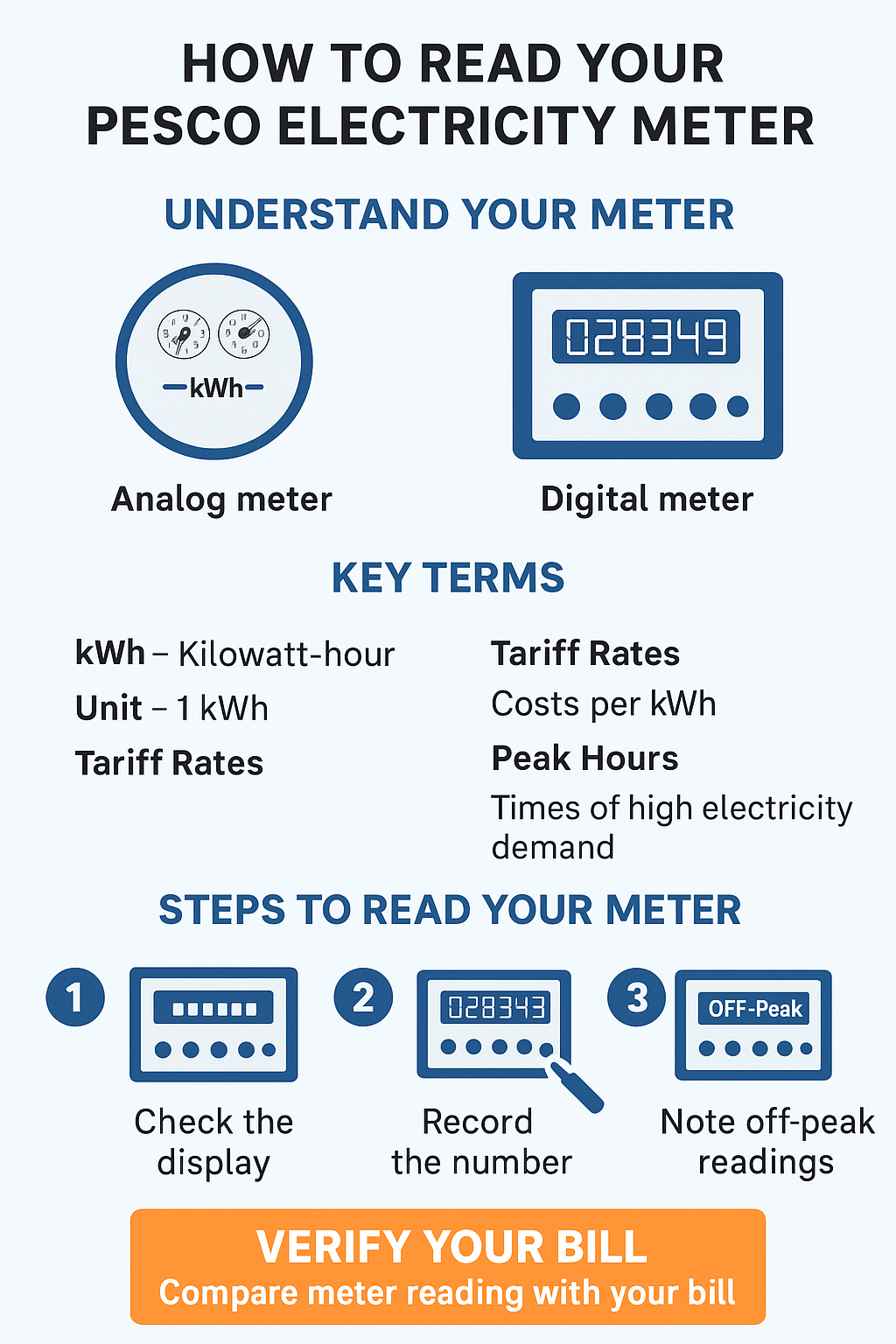
PESCO provides two main types of electricity meters, each with its own way of displaying your energy consumption:
Analog Meter (Mechanical Display)
The analog meter is the traditional type you may still find in many homes. It uses rotating dials to show your electricity usage. Reading it correctly requires understanding which dial represents which digit and noting them carefully from left to right. Although simple, analog meters can sometimes be tricky if you’re not familiar with their layout.
Digital Meter (LCD Display)
The digital meter is the modern version and is becoming more common across PESCO’s service areas. It features an LCD screen that displays your consumption in clear numbers, making it easier to read and less prone to errors. Some digital meters also show additional information, like peak and off-peak usage, helping you track your energy patterns more effectively.
Why Meter Reading Matters
Accurately reading your PESCO electricity meter is more than just a technical task—it’s about control. When you know exactly how much electricity you’ve used, you can:
-
Avoid overpaying due to estimated readings or billing errors.
-
Track your energy consumption and identify ways to save on electricity.
-
Ensure your bills reflect actual usage, which is crucial for budgeting.
Whether you’re using an analog or digital meter, taking a few minutes to read it regularly can make a big difference in managing your electricity costs efficiently.
Key Terms You Should Know
Understanding your PESCO electricity meter is easier when you know the key terms related to electricity usage and billing. These terms will help you read your meter correctly and make sense of your electricity bill.
kWh (Kilowatt-Hour) – What Does It Mean?
A kilowatt-hour (kWh) is the standard unit used by PESCO to measure electricity consumption. In simple terms, 1 kWh equals using 1,000 watts of electricity for one hour. For example, if you run a 100-watt light bulb for 10 hours, it consumes 1 kWh of electricity. Your meter records these kWh units, which directly determine the amount you pay on your electricity bill.
Units of Electricity Explained
When you look at your PESCO meter, the numbers you see indicate the total units of electricity consumed. Each unit represents 1 kWh of energy. By comparing your current reading with the previous reading on your bill, you can calculate your electricity usage over a billing period. This helps you track energy consumption and manage electricity costs efficiently.
Tariff Rates and Peak Hours in PESCO Billing
PESCO charges different tariff rates depending on your category of connection and electricity usage. Some meters also record peak and off-peak hours, especially in areas with time-of-day billing. Peak hours usually cost more per unit because electricity demand is higher, while off-peak hours are cheaper. Knowing this helps you plan usage and reduce your bill.
How These Terms Affect Your Electricity Bill Calculation
By understanding kWh, units, tariff rates, and peak hours, you can make sense of your PESCO bill. Accurate meter reading combined with knowledge of these terms ensures you’re only paying for what you actually consume. This awareness can help you identify unusual spikes in usage, avoid overcharging, and make smarter decisions about electricity consumption.
Step-by-Step Guide: How to Read Your PESCO Meter
Reading your PESCO electricity meter might seem complicated at first, but it’s actually quite simple once you know the steps. Whether you have a digital meter or an analog meter, following these steps ensures accurate readings and helps you keep track of your electricity consumption.
For Digital Meters
Digital meters are straightforward and easy to read thanks to their LCD display. Here’s how you can check your consumption:
-
Locate the LCD display – The screen shows your total electricity usage in clear numbers.
-
Read the number (total units in kWh) – This is your PESCO meter reading units. Make sure you note the numbers exactly as they appear.
-
Note down off-peak and peak readings (if applicable) – Some digital meters provide separate readings for peak and off-peak hours, which helps in understanding your energy usage and managing your bill efficiently.
For Analog Meters
Analog meters might look old-fashioned, but they are still widely used. Reading them correctly requires a little attention:
-
Read the rotating dials – Analog meters usually have 4 to 6 dials. Read them from left to right, noting each digit.
-
Avoid common mistakes – Don’t skip decimals or misread the direction of the dials. Always double-check to make sure the reading matches your electricity usage.
Following these steps ensures that your PESCO meter reading is accurate, whether digital or analog. Keeping track of your PESCO meter reading units regularly helps you monitor your energy consumption, detect unusual spikes, and avoid overpaying on your electricity bills.
How to Calculate Your Electricity Usage
Once you know how to read your PESCO electricity meter, the next step is understanding how to calculate your electricity usage. This simple calculation helps you track your energy consumption, plan your usage, and ensure your bill reflects the actual units consumed.
Use This Simple Formula
To find out how much electricity you’ve used during a billing period, use this formula:
Current Reading – Previous Reading = Units Consumed
For example, if your current meter reading is 1,250 kWh and your previous reading was 1,200 kWh, then your consumption for that period is:
1,250 – 1,200 = 50 kWh
This means you used 50 units of electricity.
How Many Units Equal 1 kWh?
Remember, 1 unit on your PESCO meter equals 1 kilowatt-hour (kWh) of electricity. This standard measurement allows PESCO to calculate your bill accurately based on your tariff rates. Knowing this helps you compare your usage across months and track any unusual spikes in electricity consumption.
Example Calculation to Estimate Your PESCO Bill
Let’s say your PESCO tariff is Rs. 15 per kWh and your consumption for the month is 50 kWh. Your estimated bill would be:
50 kWh × Rs. 15 = Rs. 750
By calculating your usage like this, you can verify your bill, avoid overpaying, and plan your electricity use more efficiently.
Keeping track of your PESCO meter reading units regularly gives you control over your electricity costs and helps you identify ways to save energy at home or in your business.
Common Mistakes in Meter Reading
Even if you know how to read your PESCO electricity meter, it’s easy to make small mistakes that can lead to inaccurate readings and higher bills. Being aware of these common errors can help you avoid overpaying and ensure your electricity usage is tracked correctly.
Misreading Analog Dials
Analog meters can be tricky. Many people misread the rotating dials by noting the wrong direction or skipping numbers. Always read the dials from left to right and pay attention to decimals. Double-check your reading to avoid errors that can affect your bill.
Confusing Tariff Readings on Digital Meters
Some digital meters show peak and off-peak readings. Mistaking these numbers for your total usage is a common error. Make sure you understand which number represents your total PESCO meter reading units and which ones are for time-of-day tariff calculations.
Ignoring Previous Reading from Last Bill
Your electricity usage is calculated based on the difference between your current meter reading and the previous reading. Ignoring the last bill or using the wrong starting point can result in incorrect calculations. Always refer to your previous meter reading for accurate consumption tracking.
Tips to Avoid Wrong Meter Reading in PESCO Bill
-
Record your meter reading at the same time every month.
-
Use a notebook or smartphone to track your readings consistently.
-
Compare your calculation with the units mentioned on the bill.
-
Report discrepancies to PESCO promptly to correct any billing errors.
By following these simple tips, you can avoid mistakes, monitor your energy consumption effectively, and ensure your PESCO electricity bill is accurate every month.
How to Verify Your PESCO Bill with Meter Reading
Keeping track of your PESCO meter reading units doesn’t stop at recording the numbers—it’s equally important to verify your electricity bill. This ensures that you’re only paying for what you actually consumed and helps you spot any discrepancies early.
Match Your Bill Reading with the Current Meter Reading
Start by comparing the meter reading on your bill with your current meter reading. The difference between your current and previous readings should match the units charged on your bill. If the numbers don’t align, it could indicate an error or an estimated reading.
Check for Extra Charges or Estimated Readings
Sometimes, your PESCO bill may include extra charges or may be based on estimated meter readings. Make sure you check each item carefully. Understanding your tariff rates and how your usage is calculated can help you identify if the bill is higher than expected.
When to Report Meter Reading Issues to PESCO
If you notice that your bill doesn’t match your meter reading, it’s important to report the issue to PESCO immediately. Providing your consumer number and the correct meter reading allows PESCO to issue a corrected bill and prevent overcharging. Regular verification of your PESCO meter reading helps you maintain control over your electricity expenses.
By taking a few minutes to verify your bill, you can ensure accurate billing, avoid unnecessary charges, and monitor your electricity usage effectively.
FAQs
How do I check my PESCO meter reading online?
You can easily check your PESCO meter reading online by using your consumer number on the PESCO billing portal. Simply log in, enter your details, and you’ll be able to see your current and previous meter readings. This helps you track your electricity consumption and ensure your bill reflects your actual usage.
What is the difference between peak and off-peak readings?
Some digital PESCO meters record electricity usage during peak and off-peak hours. Peak hours are times of high electricity demand and usually cost more per unit, while off-peak hours are cheaper. Knowing this distinction helps you plan your electricity usage to save on bills and manage your energy consumption more efficiently.
How many units are in one kWh?
One unit on your PESCO meter equals 1 kilowatt-hour (kWh). This is the standard measurement of electricity used to calculate your bill. For example, running a 100-watt appliance for 10 hours consumes 1 kWh, or 1 unit, of electricity. Understanding this helps you estimate your usage and track your PESCO meter reading units accurately.
What should I do if my bill doesn’t match the meter reading?
If your PESCO electricity bill does not match your meter reading, report the discrepancy immediately to PESCO. Provide your current meter reading and consumer number, so the billing team can verify and issue a corrected bill. Regularly monitoring your meter readings helps prevent overcharging and ensures your bills are accurate.
Conclusion
Reading your PESCO electricity meter correctly is a simple yet powerful way to take control of your electricity usage. By understanding how to track your PESCO meter reading units, calculate your consumption, and verify your bill, you can ensure that you are only paying for the energy you actually use. Regular meter checks also help you spot unusual spikes in usage, avoid overcharges, and manage your electricity costs more efficiently.
Make it a habit to check your PESCO meter reading regularly—whether it’s a digital or analog meter. With a few minutes each month, you can gain clarity over your energy consumption and make informed decisions to save on electricity.
Verify your PESCO bill today and take control of your electricity usage. Stay proactive, monitor your readings, and enjoy accurate billing every month.