
How to Request a Load Extension in PESCO Connection | Step-by-Step Guide
Peshawar Electric Supply Company (PESCO) is one of the main electricity distribution companies in Khyber Pakhtunkhwa, providing reliable power to homes, businesses, and industries. From small residential connections to large commercial setups, PESCO manages the distribution and ensures smooth electricity supply across its service areas.
Understanding how a load extension works is essential for anyone looking to increase their electricity capacity safely. Whether it’s a home with new appliances or a business adding extra machinery, applying for a proper load extension ensures that your system can handle the increased demand without frequent outages or overloading issues.
Many customers request a load extension when expanding their homes, upgrading equipment, or planning for future electricity needs. By following the correct procedure, you can keep your PESCO connection safe, reliable, and ready to support all your electricity requirements efficiently.
What is a Load Extension?
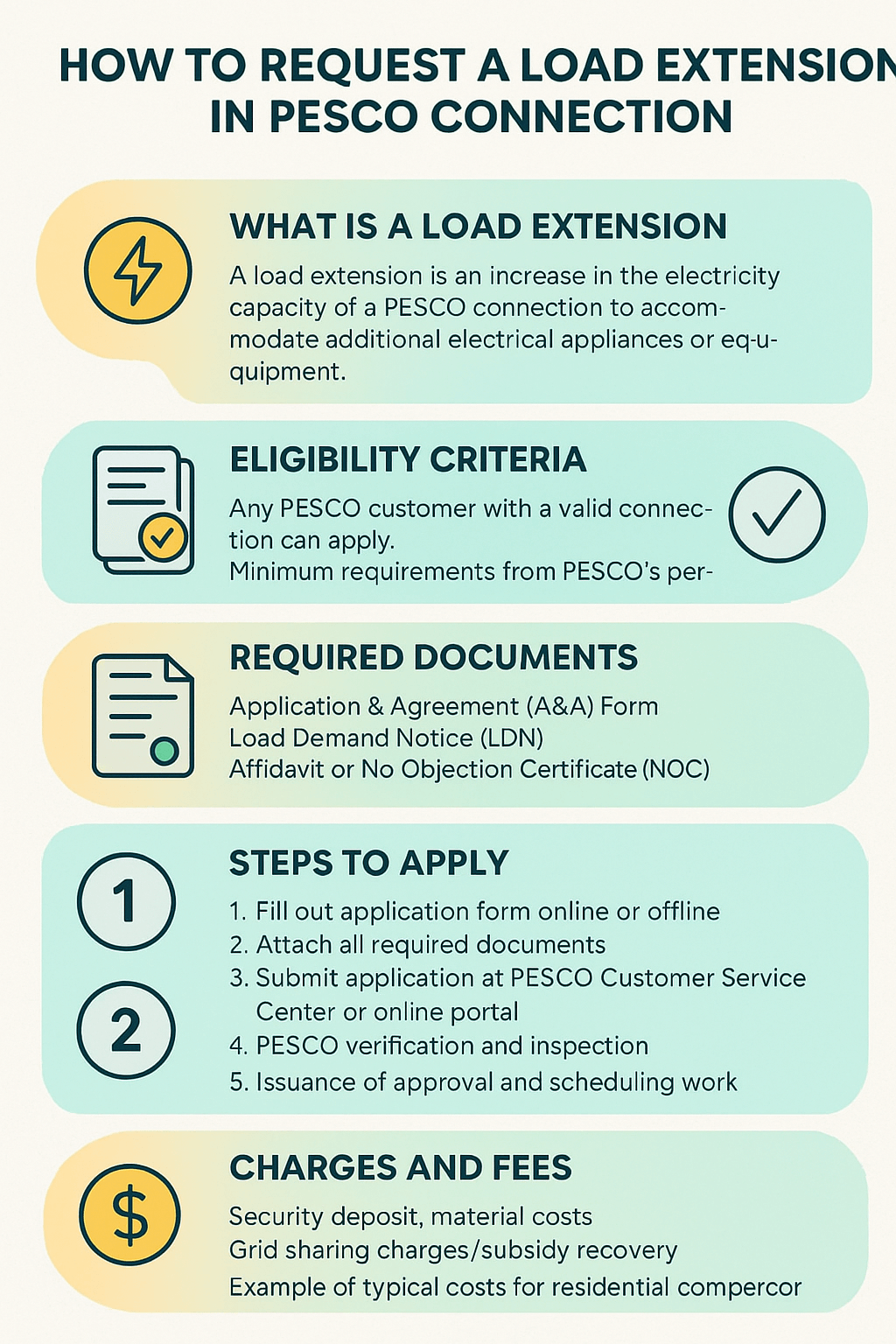
A load extension is essentially an increase in the electricity capacity of your connection. In simple terms, it allows homes, businesses, or industries to draw more power safely from the PESCO network. This is especially important if you have added new electrical appliances, machinery, or lighting that your current connection cannot handle efficiently.
The sanctioned load is the maximum electricity your connection is officially allowed to use, as approved by PESCO. On the other hand, the requested load is the additional capacity you need beyond your existing sanctioned load. Understanding this difference is crucial because applying for a load extension without knowing your limits can lead to delays or even rejection of your request.
Knowing your PESCO load limits ensures that your electrical system remains safe and reliable. It helps prevent issues like frequent power outages, overloading, or damage to your appliances. By applying for the right load extension, you can make sure your home or business runs smoothly without any interruptions, keeping your electricity supply efficient and hassle-free.
✅ LACheck how industrial vs domestic units affect your bill estimate
Eligibility Criteria for Load Extension
When it comes to increasing your electricity capacity with PESCO, not everyone qualifies automatically. There are specific eligibility criteria that ensure the system remains safe, efficient, and capable of handling the increased demand. Understanding these requirements before submitting your application can save you time, effort, and potential delays.
Who Can Apply for a Load Extension
Any existing PESCO customer who finds their current sanctioned load insufficient for daily usage can apply for a load extension. This includes homeowners, business owners, and industrial operators. However, applicants must have a valid and active connection in their name, with no outstanding bills or unresolved issues with PESCO. The company emphasizes that only legally recognized account holders can request additional load, as this prevents unauthorized or unsafe consumption of electricity.
Minimum Requirements from PESCO’s Perspective
PESCO sets several minimum requirements to ensure the requested load extension is feasible:
-
The property must have proper electrical wiring capable of handling the additional load.
-
Bills and payments must be up-to-date; pending dues can delay approval.
-
Applicants should provide ownership proof or legal authorization for the property.
-
The current sanctioned load should be clearly documented to assess the feasibility of the requested extension.
Meeting these requirements helps PESCO evaluate your request quickly and prevents unnecessary back-and-forth during the approval process.
Relevance of Customer Type (Residential, Commercial, Industrial)
Your customer type directly impacts the load extension process because PESCO tailors the approval and infrastructure accordingly:
-
Residential Customers: Usually request additional load for new appliances, air conditioning systems, or home expansions. PESCO evaluates the safety of existing household wiring and overall consumption patterns.
-
Commercial Customers: Shops, offices, and restaurants may need higher electricity capacity to power multiple devices, lighting, or HVAC systems. The load extension considers peak operational hours and overall energy demand.
-
Industrial Customers: Factories and production units often require significant load increases to operate machinery and production lines. PESCO may assess transformer capacity and the grid’s ability to handle large industrial loads safely.
By understanding the eligibility criteria and aligning your request with your customer type, you can ensure a smoother application process and faster approval from PESCO. Meeting all the conditions also helps maintain a safe and reliable electricity supply for your home, business, or industrial operation.
Required Documents for PESCO Load Extension
Applying for a load extension with PESCO involves submitting certain essential documents to ensure your request is processed smoothly and without delays. Providing the correct paperwork helps PESCO verify your eligibility, assess your electricity needs, and approve the load increase safely.
Application & Agreement (A&A) Form
The Application & Agreement (A&A) Form is the foundation of your load extension request. This form captures your personal details, connection information, and the requested increase in electricity load. Filling out this form accurately is crucial, as any errors or omissions can lead to delays in processing your application. Make sure to clearly mention your current sanctioned load and the additional load you require.
Load Demand Notice (LDN)
The Load Demand Notice (LDN) is an official document that indicates the amount of additional load you are requesting. It helps PESCO determine whether your electricity network can safely accommodate the increase. The LDN should be carefully prepared, reflecting the actual requirements of your home, business, or industrial setup. Overestimating or underestimating the load may cause complications or require resubmission.
Affidavit / NOC (No Objection Certificate)
Depending on the property and customer type, PESCO may require an Affidavit or a No Objection Certificate (NOC). This document confirms that there are no legal or ownership issues regarding your property and that you are authorized to request a load extension. It also ensures that PESCO has formal permission to make necessary adjustments to the connection.
Supporting Documents
Along with the main forms, certain supporting documents are necessary to validate your request:
-
CNIC or National Identity Card to confirm the applicant’s identity.
-
Property proof or ownership documents to show legal rights over the premises.
-
Previous electricity bills provide a record of your consumption patterns and payment history.
Collecting all these documents before submitting your application can save time and prevent repeated visits to the PESCO Customer Service Center. Ensuring everything is complete and accurate demonstrates preparedness and helps PESCO process your load extension request efficiently.
Steps to Apply for Load Extension
Requesting a load extension from PESCO is a straightforward process if you follow the proper steps and provide all required information and documents. By understanding each step, you can ensure a smooth and hassle-free application experience.
Step 1: Fill Out the Application Form (Online or Offline)
The first step in requesting a load extension is to complete the Application & Agreement (A&A) form. You can either fill it out online through PESCO’s portal or submit a physical form at the local Customer Service Center. Make sure to provide accurate details about your current sanctioned load, the additional load you need, and your personal or business information. Correctly filling out the form reduces the chances of delays during processing.
Step 2: Attach All Required Documents
Once the application form is complete, gather all supporting documents. This includes the Load Demand Notice (LDN), CNIC or identity proof, property ownership documents, previous electricity bills, and any required Affidavit or NOC. Organizing these documents carefully ensures your application is complete and ready for submission, avoiding unnecessary back-and-forth with PESCO staff.
Step 3: Submit Application at PESCO Customer Service Center or Online Portal
After preparing the application form and supporting documents, submit your request either in person at the nearest PESCO Customer Service Center or online via PESCO’s digital platform. Online submission is convenient and can save time, but an in-person submission allows you to clarify any questions directly with PESCO staff. Always keep a copy of the submission receipt or acknowledgment for your records.
Step 4: PESCO Verification and Inspection
Once submitted, PESCO will review your application and conduct a verification process. This may include an inspection of your property to ensure the wiring and infrastructure can handle the requested load. Verification is a critical step to maintain electrical safety and ensure the increased load will not affect other consumers on the network.
Step 5: Issuance of Approval and Scheduling of Work
After successful verification, PESCO will issue an official approval for your load extension. The work, such as upgrading your connection, installing new meters, or adjusting transformers, will then be scheduled. Once the work is completed, your connection will support the increased electricity load, allowing your home or business to operate smoothly and safely without the risk of overloading.
PESCO Load Extension Charges
When applying for a load extension with PESCO, it’s important to understand the fees involved. Being aware of the costs upfront helps you plan better and ensures there are no surprises during the application process.
Security Deposit
One of the primary charges for a load extension is the security deposit. This is a refundable amount that PESCO requires to safeguard against any potential payment defaults or misuse of electricity. The security deposit varies depending on your customer type and the amount of additional load requested. Residential customers typically pay a lower deposit, while commercial or industrial connections may require a higher amount due to increased consumption.
Material Costs
Another component of the total cost is material charges. These cover the installation of meters, transformers, wiring adjustments, and other equipment needed to support the extended load. The cost depends on the complexity of the work and the type of connection. For example, extending load in a residential home may require minimal wiring upgrades, whereas commercial or industrial setups might need significant infrastructure adjustments.
Grid Sharing Charges / Subsidy Recovery
PESCO may also apply grid sharing charges or subsidy recovery fees. These charges are calculated to fairly distribute the cost of electricity network maintenance and government subsidies among all consumers. They ensure that the grid remains stable and capable of handling increased electricity demand from extended loads.
Example of Typical Costs for Residential vs Commercial Connections
-
Residential Customers: Security deposit is usually modest, material costs are relatively low, and additional fees may be minimal if the load increase is small.
-
Commercial Customers: Security deposits are higher, material costs can be significant depending on the size of the business, and grid sharing or subsidy recovery charges may also apply.
-
Industrial Connections: These involve the highest charges due to large-scale infrastructure needs and higher electricity consumption.
Understanding these charges before applying helps you budget effectively and ensures a smooth process. Planning and knowing the costs associated with a PESCO load extension prevents delays and makes the entire experience stress-free.
Online vs Offline Application Process
Applying for a PESCO load extension can be done either online or offline, giving customers flexibility based on their preferences and convenience. Understanding the differences between the two methods can help you choose the option that best suits your needs.
Advantages of Online Application
Submitting your load extension request online offers several benefits. First, it is highly convenient, allowing you to complete the application from your home or office without the need to visit a PESCO Customer Service Center. Second, online submissions are often processed faster, as the digital system automatically verifies your details and reduces manual paperwork. You can also upload required documents directly, ensuring that everything is in place for PESCO’s verification process.
Offline Submission Procedure at PESCO Offices
For customers who prefer a more traditional approach, offline submission is also available. You need to visit the nearest PESCO Customer Service Center, fill out the Application & Agreement (A&A) form, and submit it along with all supporting documents, such as the Load Demand Notice (LDN), CNIC, and property proof. Offline submission allows you to clarify any questions directly with PESCO staff, making it helpful for first-time applicants or those with complex load extension requests.
Tracking Application Status
Whether you apply online or offline, tracking the status of your load extension application is important. For online submissions, you can usually log in to PESCO’s portal to check progress updates. Offline applicants can contact the Customer Service Center or keep their submission receipt handy to follow up. Monitoring your application ensures you are aware of verification schedules, inspections, and the final approval, making the entire process transparent and hassle-free.
Choosing the right method—online or offline—depends on your convenience, but both processes are designed to ensure a smooth experience while requesting a PESCO load extension.
Approval and Installation Process
After submitting your PESCO load extension application, the next critical phase is the approval and installation process. Understanding what happens during this stage can help you stay informed and ensure a smooth transition to your increased electricity capacity.
PESCO Inspection Requirements
Before approving your load extension, PESCO conducts a detailed inspection of your property and existing electrical setup. This inspection verifies that your wiring, meters, and overall infrastructure can safely handle the requested additional load. The PESCO team may also check for compliance with safety regulations and proper installation standards to prevent electrical hazards. Proper inspection ensures that your extended load is both safe and reliable for long-term usage.
Timeline for Approval and Installation
Once the inspection is complete and your documents are verified, PESCO typically issues official approval within a few working days, although timelines can vary depending on the complexity of the load request and the type of connection.
After approval, the installation work is scheduled, which may include upgrading meters, adjusting wiring, or connecting to a higher-capacity transformer. Keeping track of the schedule and staying in touch with PESCO helps ensure that the process proceeds without delays.
Dedicated Transformer or 11kV Feeder Considerations
In some cases, especially for larger commercial or industrial connections, your load extension may require a dedicated transformer or connection to an 11kV feeder. This ensures that your additional electricity demand does not affect neighboring connections and maintains the stability of the local grid. PESCO evaluates these technical requirements during inspection and makes necessary adjustments to support your increased load safely.
By understanding the approval and installation process, you can better prepare for your PESCO load extension and ensure that your home, business, or industrial connection receives reliable, uninterrupted electricity. Proper planning and compliance with PESCO guidelines make the entire process smooth and stress-free.
Tips for a Smooth Load Extension Application
Applying for a PESCO load extension can be a simple and hassle-free process if you plan ahead and follow a few key tips. These practical steps ensure your application is complete, accurate, and processed quickly.
Verify Sanctioned Load Limits Before Applying
Before submitting your application, check your current sanctioned load to understand how much additional capacity you can request. Knowing your limits helps avoid mistakes such as overestimating the load, which can lead to delays or the need for resubmission. Accurate load calculation ensures your extended electricity supply meets your home, business, or industrial needs efficiently.
Ensure All Documents Are Complete
A major reason for delays in load extension approvals is missing or incomplete documents. Make sure to gather and attach all required paperwork, including the Application & Agreement (A&A) form, Load Demand Notice (LDN), CNIC, property proof, previous electricity bills, and any NOC or affidavit if applicable. Double-checking everything before submission saves time and prevents unnecessary back-and-forth with PESCO.
Keep Receipt / Acknowledgment for Future Reference
Whenever you submit your application, whether online or offline, always keep a copy of the receipt or acknowledgment. This serves as proof of submission and can be very helpful if you need to follow up with PESCO regarding the status of your load extension. It also protects you in case of any discrepancies or delays.
Contact PESCO Customer Service for Clarifications
If you have any doubts about the process, documents, or charges, don’t hesitate to reach out to PESCO customer service. They can provide guidance on eligibility, required documents, and technical considerations for your connection. Communicating with the customer service team ensures your application is complete and compliant, making the entire process smoother and faster.
Following these tips can help you submit a successful PESCO load extension application, avoid delays, and enjoy uninterrupted electricity supply for your home, business, or industrial setup.
FAQs
How long does PESCO take to approve a load extension?
The approval timeline for a PESCO load extension can vary depending on your connection type and the complexity of the request. Typically, residential applications may be approved within a few working days after document verification and inspection.
Commercial or industrial applications, which may require additional infrastructure adjustments or dedicated transformers, could take longer. Staying in touch with PESCO and ensuring all documents are complete can help speed up the process.
Can I apply online for a load extension?
Yes, PESCO allows customers to submit their load extension applications online through their digital portal. Online applications are convenient, allow you to upload all required documents, and often result in faster processing compared to offline submission. However, offline submissions at PESCO Customer Service Centers are also available for those who prefer direct assistance or have complex requests.
What happens if my application is rejected?
If your load extension application is rejected, PESCO usually provides a reason for the decision. Common reasons include incomplete documents, exceeding sanctioned load limits, or insufficient infrastructure to support the requested capacity. In such cases, you can revise your application, provide missing documents, or consult PESCO customer service for guidance on how to meet the requirements and reapply.
Do I need a No Objection Certificate (NOC) for load extension?
Depending on the property ownership and location, PESCO may require an Affidavit or NOC. This document confirms that you are authorized to request a load extension and that there are no legal issues with the property. Ensuring you have the necessary NOC or affidavit in place can prevent delays.
Can I track the status of my load extension application?
Yes, whether you submit your application online or offline, it’s important to track the progress. Online submissions can be tracked directly via PESCO’s portal, while offline applicants can check with the Customer Service Center using the submission receipt. Tracking your application helps you stay informed about inspections, verification, and final approval.
Are there any additional charges for commercial or industrial connections?
Yes, commercial and industrial connections usually incur higher security deposits, material costs, and grid sharing charges compared to residential applications. The charges depend on the requested load and the infrastructure required to safely provide additional electricity capacity.