
PESCO Net Metering Guide 2025 – Solar System Benefits & Application Process
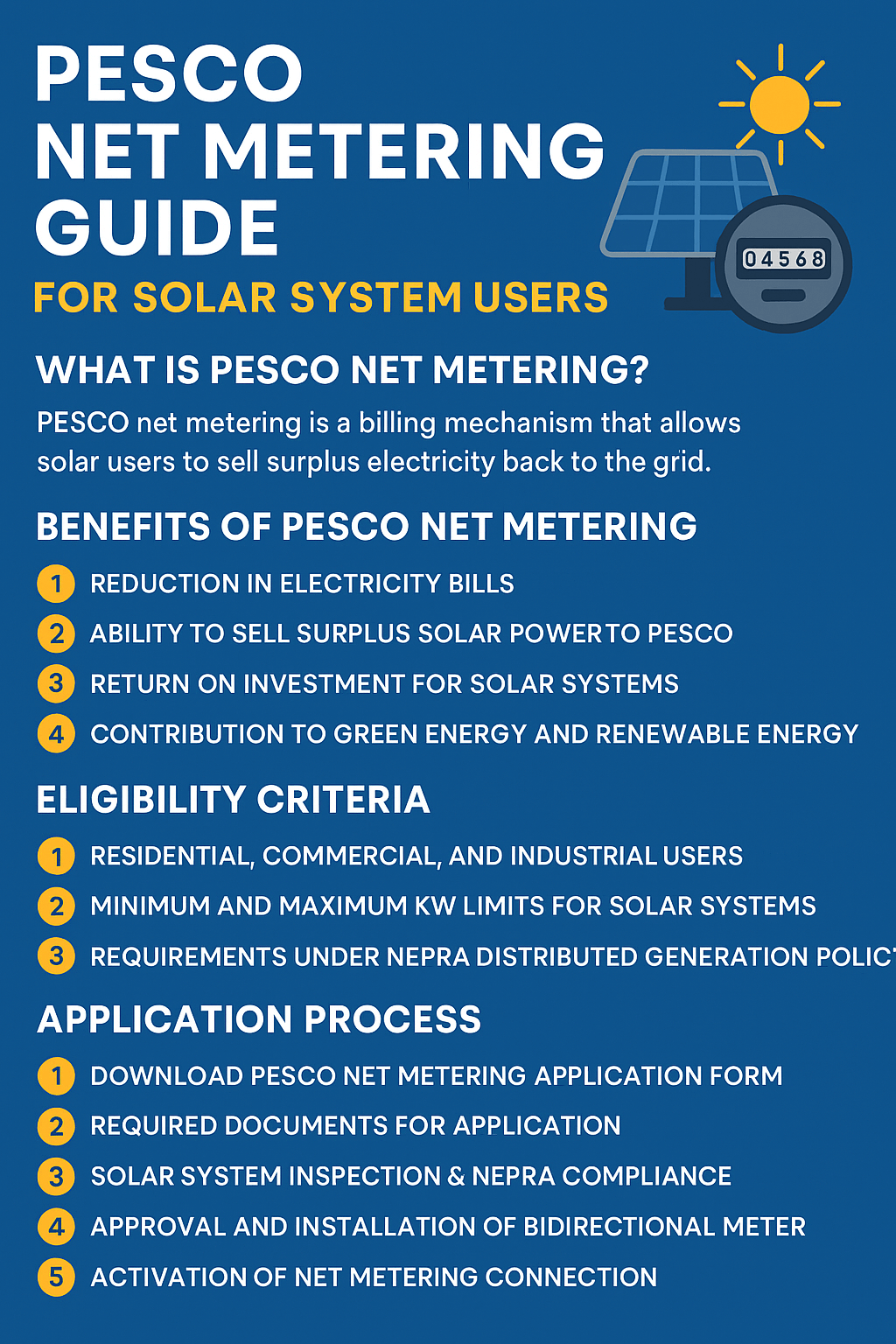
If you live in Khyber Pakhtunkhwa and have invested in a solar power system, PESCO net metering is one of the best ways to save on electricity bills and even earn credits for your extra energy. Net metering allows solar users to connect their system to the PESCO grid so that any surplus electricity generated by your solar panels can be exported back to the grid. This means when your panels produce more energy than you consume, you don’t waste it — instead, you get compensated through adjustments in your monthly bill.
With rising energy costs and frequent load shedding in Pakistan, solar energy integration has become more than just a smart choice; it’s a necessity for a sustainable future. By utilizing renewable energy, households and businesses can reduce their dependency on traditional sources and contribute to a cleaner environment.
To support this transition, NEPRA (National Electric Power Regulatory Authority) has implemented policies like the Distributed Generation and Net Metering Regulations, which make it easier for consumers to register for net metering and sell excess power to the grid. This initiative is designed to encourage more people to adopt green energy and reduce the burden on the national electricity system.
What is PESCO Net Metering and How Does It Work?
Definition of Net Metering
PESCO net metering is a smart billing system that allows solar energy users to connect their solar power system to the PESCO electricity grid. The concept is simple: when your solar panels produce more energy than you consume, the excess electricity is sent back to the PESCO grid. In return, you receive credits on your bill for these surplus units, helping you save money every month.
How Bidirectional Meters Measure Import and Export Units
The process works through a bidirectional meter installed by PESCO. Unlike a traditional electricity meter that only tracks the power you use, this special meter records both:
-
Imported units: Electricity you consume from PESCO.
-
Exported units: Electricity you send back to the PESCO grid from your solar system.
This dual recording ensures accurate billing and transparent adjustment of units.
Process of Adjusting Electricity Bills with Solar Surplus
At the end of each billing cycle, the difference between imported and exported units is calculated. If you generate more electricity than you use, your next bill will show credits instead of additional charges. This way, every extra unit your solar panels produce turns into real savings, making your investment in renewable energy highly rewarding.
Benefits of PESCO Net Metering for Solar System Users
Significant Reduction in Electricity Bills
One of the biggest advantages of PESCO net metering is the dramatic decrease in your monthly electricity bills. When your solar panels generate more energy than you consume, the extra units are sent back to the PESCO grid. These exported units are credited to your account, reducing the amount you pay. Over time, this can lead to massive savings for both residential and commercial consumers.
Sell Surplus Solar Power to PESCO
Another great benefit is the ability to sell your extra solar energy back to PESCO. Instead of wasting the electricity produced during peak sunlight hours, you can export it to the grid and earn credits. This feature turns your solar power system into a smart investment that works for you even when you’re not using electricity.
High Return on Investment for Solar Systems
Installing a solar system requires an upfront cost, but PESCO net metering makes sure you get an excellent return on investment (ROI). By lowering your bills and offering credits for surplus energy, your solar setup pays for itself much faster. For businesses and households, this means long-term financial benefits and energy independence.
Contribution to Green Energy and Renewable Energy Goals
When you participate in PESCO’s net metering program, you’re not just saving money—you’re helping Pakistan move toward renewable energy targets. By feeding clean energy into the grid, you reduce reliance on fossil fuels, cut carbon emissions, and contribute to a greener, more sustainable future.
Eligibility Criteria for PESCO Net Metering
Who Can Apply for PESCO Net Metering?
The good news is that PESCO net metering is available for all types of consumers, including residential, commercial, and industrial users. Whether you have a small solar setup at home or a large solar power system for your business, you can take advantage of this program and start saving on your electricity bills.
Minimum and Maximum kW Limits for Solar Systems
To qualify for PESCO net metering, your solar power system must fall within the capacity range allowed by NEPRA. Typically:
-
The minimum capacity starts from 1 kW.
-
The maximum capacity can go up to 1 MW for large commercial and industrial consumers.
This wide range makes net metering suitable for small households as well as big businesses looking to reduce energy costs.
Requirements Under NEPRA Distributed Generation Policy
To ensure safety and reliability, your system must meet the standards set by NEPRA’s Distributed Generation and Net Metering Regulations. This includes:
-
Using a certified inverter that supports grid connectivity.
-
Following all technical and safety guidelines provided by PESCO.
-
Obtaining necessary approvals and documentation before connecting to the grid.
Meeting these requirements ensures a smooth application process and hassle-free integration of your solar system with the PESCO grid.
Step-by-Step Process to Apply for PESCO Net Metering
Applying for PESCO net metering is a straightforward process, but it requires following each step carefully to ensure smooth approval. Here’s how you can complete the PESCO net metering registration process:
Step 1: Download the PESCO Net Metering Application Form
The first step is to download the official PESCO net metering application form from their authorized platform or visit the nearest customer service center. This form is essential for starting the registration process and provides all necessary fields for your solar system details.
Step 2: Prepare the Required Documents for Application
Along with the application form, you will need to submit a few important documents, such as:
-
Copy of your CNIC (Computerized National Identity Card)
-
Latest PESCO electricity bill
-
Technical details of your solar power system
-
NEPRA Distributed Generation license (if required)
Having these documents ready will make the process quick and hassle-free.
Step 3: Solar System Inspection and NEPRA Compliance
Once your application is submitted, PESCO will inspect your solar installation to ensure it meets NEPRA’s technical standards. This includes checking:
-
The quality of your solar panels and inverter
-
Compliance with safety guidelines
-
Proper grid connectivity to avoid any power issues
Step 4: Approval and Installation of the Bidirectional Meter
After successful inspection, PESCO will approve your application and install a bidirectional meter at your premises. This special meter measures both imported units (electricity you use) and exported units (electricity you send back) to the PESCO grid, making accurate billing possible.
Step 5: Activation of Your Net Metering Connection
Finally, your PESCO net metering connection will be activated. From this point onward, any extra electricity your solar panels generate will be exported to the grid, and you’ll start receiving credits on your electricity bills. This is how you turn your solar investment into real financial savings.
Required Documents for PESCO Net Metering Application
When applying for PESCO net metering, it’s important to prepare all the necessary documents in advance to avoid delays in the approval process. Below is the list of documents you will need:
Application Form
The first and most important requirement is the official PESCO net metering application form. This form contains all the necessary details about your solar system, consumer information, and technical specifications that PESCO needs to process your request.
Copy of CNIC
A valid CNIC (Computerized National Identity Card) copy of the consumer is mandatory for verification purposes. Ensure that the CNIC details match the name on the electricity bill to avoid any application issues.
Latest PESCO Electricity Bill
You must provide a copy of your recent PESCO electricity bill. This helps PESCO verify your consumer number, connection type, and other account details before approving your net metering registration.
NEPRA Generation License
For larger solar installations (usually above a certain capacity), you may also need a NEPRA Distributed Generation License. This license confirms that your system complies with NEPRA regulations and can safely connect to the PESCO grid.
PESCO Net Metering Tariff and Billing Adjustment
One of the biggest advantages of PESCO net metering is the way your electricity bill is adjusted every month. Understanding how the units and tariffs work will help you see the real benefits of this system.
How Units Exported and Imported Are Calculated
Your bidirectional meter plays an important role in tracking energy flow. It measures:
-
Imported Units – Electricity you consume from PESCO.
-
Exported Units – Extra electricity your solar panels send back to the grid.
At the end of the month, PESCO calculates the net difference between imported and exported units. If you generate more than you consume, those extra units are credited to your next bill, reducing your total cost.
NEPRA-Approved Tariff Rates for Solar Power
The credit for exported units is based on NEPRA-approved tariff rates for renewable energy. These rates are fixed and transparent, ensuring that solar users get fair value for the electricity they supply to the PESCO grid. This not only saves you money but also makes your solar investment more profitable.
Monthly Bill Adjustment Process
After calculating imported and exported units, PESCO adjusts your bill accordingly. If your solar power system produces more energy than you use, you may end up paying a minimal bill—or even carrying forward surplus credits to the next month. This process makes net metering one of the most cost-effective solutions for reducing electricity expenses in the long run.
Installation and Technical Requirements
Before applying for PESCO net metering, you need to make sure that your solar system meets the technical standards set by PESCO and NEPRA. These requirements ensure safe, efficient, and reliable operation.
On-Grid Solar System Compatibility
To qualify for net metering, your setup must be an on-grid solar system. This type of system is directly connected to the PESCO electricity grid, allowing you to export surplus electricity and receive credits. Off-grid systems or hybrid setups are not eligible for net metering under the current regulations.
Inverter Specifications for Net Metering
Your solar system must include a grid-tied inverter that is compatible with bidirectional metering. The inverter should:
-
Be NEPRA-approved and comply with international standards.
-
Support anti-islanding protection to ensure safety during power outages.
-
Provide accurate synchronization with the PESCO grid.
Choosing the right inverter is crucial for smooth PESCO net metering installation and operation.
Safety and Wiring Standards as per PESCO Rules
Safety is a top priority for PESCO. Your solar installation must follow all electrical wiring standards and protection mechanisms, including:
-
Proper earthing and grounding.
-
Certified circuit breakers and fuses.
-
Compliance with PESCO safety guidelines for grid-connected systems.
Meeting these standards not only ensures approval but also guarantees safe and efficient operation of your solar power system.
Tips for Solar System Users to Maximize Benefits
Install Efficient Solar Panels
To get the most out of PESCO net metering, invest in high-efficiency solar panels. These panels produce more electricity even in low sunlight conditions, ensuring better energy generation and more savings on your electricity bills.
Monitor Energy Production vs. Consumption
Keep track of your solar energy generation and home electricity usage. By monitoring this balance, you can adjust your usage habits and make sure you are sending maximum surplus power to the grid, earning higher credits on your PESCO bill.
Ensure Proper Maintenance of Solar Equipment
Regular solar panel cleaning and inverter maintenance are essential for long-term performance. Dust and debris on panels can reduce efficiency, while a well-maintained inverter ensures smooth energy conversion and compliance with PESCO’s technical standards.
FAQs
What is PESCO net metering and how does it work?
PESCO net metering is a billing system that allows solar users to connect their solar panels to the PESCO grid. When your solar panels produce extra electricity, it is sent back to the grid, and you receive credits that reduce your electricity bill. A bidirectional meter measures both the energy you consume and the energy you export.
Is net metering available for domestic consumers in PESCO?
Yes! PESCO net metering is available for domestic, commercial, and industrial consumers. Whether you have a small residential solar system or a large commercial setup, you can apply for net metering if your system meets the required technical standards.
How many kW solar system is eligible for net metering?
The minimum capacity for PESCO net metering is usually 1 kW, while the maximum capacity allowed under NEPRA’s Distributed Generation Policy is up to 1 MW. This range makes net metering suitable for small homes as well as large businesses.
How long does PESCO take for approval?
The approval process for PESCO net metering typically takes a few weeks. After you submit your application and documents, PESCO inspects your solar system for compliance with safety and technical standards before installing the bidirectional meter.
What are the costs involved in PESCO net metering?
The main costs include the bidirectional meter installation, application processing fee, and any upgrades required to meet technical standards. The cost varies based on your system size, but the long-term savings from reduced bills make it a worthwhile investment.
Conclusion
PESCO net metering is a game-changer for anyone who wants to reduce electricity costs and contribute to a greener Pakistan. By integrating your solar system with the PESCO grid, you not only cut down your monthly bills but also get the chance to sell surplus energy back to the grid. This means more savings, a faster return on investment, and active participation in NEPRA’s renewable energy vision.
If you’ve been thinking about switching to solar, now is the best time. The process is simple, the benefits are long-lasting, and the environment will thank you for it.
Start your PESCO net metering process today and take a step towards clean energy and financial savings!