Prepaid Electricity Meters in PESCO – Benefits, Challenges & Future
Electricity billing in Pakistan has traditionally relied on the postpaid system, where consumers receive monthly bills based on usage and pay after consumption. While this method has served for decades, it comes with challenges like delayed payments, billing disputes, and revenue recovery issues for distribution companies.
In recent years, PESCO (Peshawar Electric Supply Company) has been taking steps toward modernizing its billing and energy distribution systems. From introducing online bill checking services to exploring smart grid technology, PESCO is moving toward a more digital and transparent electricity management system.
One of the most promising innovations in this journey is the prepaid electricity meter. Unlike traditional meters, these devices work on a pay-as-you-go model, allowing consumers to recharge electricity units in advance and monitor their usage in real time. This system not only empowers consumers to take full control over their electricity expenses but also helps PESCO improve efficiency, reduce losses, and provide better customer service.
As the energy sector in Pakistan evolves, many consumers are asking: Will PESCO introduce prepaid electricity meters in the near future? This article explores the concept, benefits, challenges, and future possibilities of prepaid meters in PESCO.
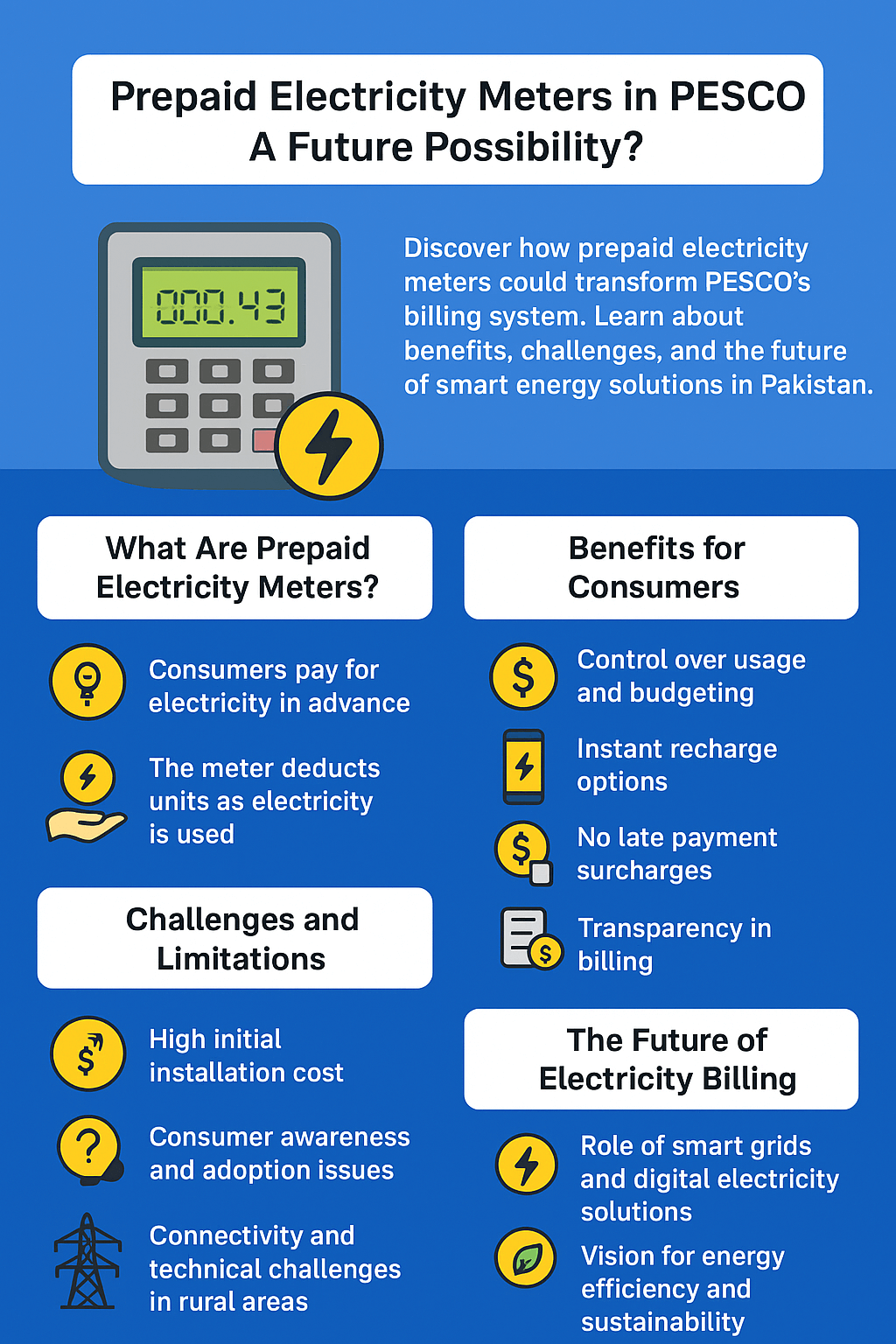
What Are Prepaid Electricity Meters?
A prepaid electricity meter is a modern billing solution that works on the pay-as-you-go electricity system, allowing consumers to purchase electricity units in advance rather than paying after consumption. Just like recharging your mobile balance, you can top up your electricity units through digital payment methods or token-based recharge systems. Once the purchased units are used up, you need to recharge again to continue your electricity supply.
This system puts full control of electricity usage in the hands of consumers, helping them manage their budget effectively and avoid unexpected bills. With features like real-time usage monitoring, consumers can track how much energy they consume daily, making it easier to plan and save.
✅ Calculate your electricity bill with real-time PESCO charges
How Is It Different from Postpaid Meters?
Traditional postpaid electricity meters work on a bill-after-usage model, where the consumer uses electricity for an entire month and then receives a bill at the end. This often leads to delayed payments, high bills, and billing disputes.
On the other hand, prepaid meters eliminate these issues by allowing you to pay before you consume electricity. No more late payment surcharges, no more surprise bills—just simple, transparent billing.
Global Examples of Prepaid Metering
Prepaid electricity meters are not new to the world. Many countries, including South Africa, the United Kingdom, and India, have successfully adopted this system to improve energy efficiency and customer satisfaction. These countries have shown that prepaid systems help reduce energy theft, improve revenue recovery, and encourage responsible electricity usage.
As technology advances, Pakistan’s energy sector is also moving toward smart solutions, and PESCO could soon join the list of utilities offering prepaid electricity meters.
Why Is PESCO Considering Prepaid Meters?
As the demand for smart energy solutions grows in Pakistan, PESCO (Peshawar Electric Supply Company) is actively exploring modern technologies to improve electricity distribution and billing efficiency. One of the most significant steps in this direction is the introduction of prepaid electricity meters, which aligns with NEPRA’s policies and Pakistan’s smart grid initiatives.
Consumer Benefits – Greater Control and Transparency
For consumers, prepaid electricity meters offer complete control over energy usage. Instead of worrying about high monthly bills or unexpected charges, users can purchase electricity units in advance and manage their budget easily. This system eliminates estimated bills, reduces billing disputes, and promotes responsible energy consumption. Plus, with real-time monitoring, you always know how much power you have left.
PESCO’s Operational Improvements
From PESCO’s perspective, prepaid meters can significantly reduce defaulters and improve revenue recovery. Traditional postpaid billing often leads to delays in payments or unpaid bills, creating financial challenges for the company. By shifting to a pay-before-use model, PESCO ensures timely payments and minimizes the risk of outstanding dues. It’s a win-win situation for both consumers and the company.
Integration with Smart Grid Technology
Prepaid electricity meters are not just about billing convenience; they are a crucial part of smart grid technology integration. These meters provide real-time data that helps PESCO in load management, energy planning, and system efficiency. In the long run, this will lead to better power distribution, fewer outages, and improved service quality for consumers.
Benefits of Prepaid Electricity Meters for Consumers
The prepaid electricity system is designed to make life easier for consumers by offering flexibility, transparency, and control. Unlike traditional billing methods, this system empowers you to manage your energy consumption and expenses without surprises. Here’s why PESCO consumers can benefit greatly from prepaid electricity meters:
Full Control Over Usage and Budgeting
One of the biggest advantages of prepaid electricity meters is control. You decide how much electricity to purchase based on your budget. No more shocking bills at the end of the month! This pay-as-you-go approach ensures responsible energy usage, helping you save money and avoid unnecessary wastage.
Instant Recharge Anytime, Anywhere
Gone are the days of standing in long queues to pay bills. With prepaid meters, you can recharge your electricity units instantly through mobile apps, online banking, or token-based kiosks. This convenience allows you to keep your account active without the hassle of visiting a billing office.
No Late Payment Surcharges
One of the major pain points for consumers is late payment charges on electricity bills. With prepaid meters, this problem disappears completely because you pay before you use electricity. No more worrying about due dates or penalties—just simple and stress-free energy management.
Transparent and Accurate Billing
Prepaid electricity meters bring complete transparency to your energy usage. Every unit you purchase and consume is recorded in real time, eliminating the risk of wrong meter readings or estimated bills. This digital electricity payment system ensures fairness and accuracy for all consumers.
Benefits for PESCO and the Energy Sector
The introduction of prepaid electricity meters is not only beneficial for consumers but also a game-changer for PESCO and Pakistan’s energy sector. By adopting this advanced billing system, PESCO can enhance operational efficiency, improve revenue flow, and promote energy conservation across its network.
Improved Revenue Collection and Fewer Billing Disputes
One of the biggest challenges for PESCO is recovering unpaid bills from defaulters. With postpaid billing, delays and non-payments are common, leading to huge financial losses. Prepaid electricity meters eliminate this problem, as consumers must pay in advance before using electricity. This ensures a steady cash flow for PESCO and reduces billing disputes, making the process fair and transparent.
Efficient Load Management with Real-Time Data
Prepaid meters work with smart metering technology, which means PESCO gets real-time data on electricity usage. This data is extremely valuable for load forecasting and energy distribution planning. By analyzing usage patterns, PESCO can balance supply and demand effectively, reduce the risk of overload, and minimize power outages.
Promoting Energy Conservation
Prepaid meters encourage responsible energy consumption because consumers can monitor their usage in real time. When people know exactly how much electricity they are using and how quickly their units are depleting, they naturally adopt energy-saving habits. This leads to lower demand on the national grid and contributes to energy sustainability in Pakistan.
Challenges and Limitations
While prepaid electricity meters sound like the perfect solution for modern billing, their implementation comes with a few practical challenges. Before PESCO can roll out this system on a large scale, certain technical, financial, and regulatory hurdles need to be addressed.
High Initial Installation Cost
The first major challenge is the cost of smart meters. Prepaid meters require advanced technology and digital infrastructure, which means a higher upfront investment compared to traditional meters. For many households and businesses, this cost might seem like a burden, making it a barrier to adoption.
Consumer Awareness and Adoption Issues
Switching from a postpaid to a prepaid system is a big change for consumers who have been using traditional billing for decades. Lack of awareness about how prepaid meters work and their benefits can slow down adoption. PESCO will need to educate customers through campaigns and guidance on how to recharge and monitor usage effectively.
Connectivity and Technical Challenges in Rural Areas
While urban areas may adapt quickly, rural regions face connectivity issues that can make online top-ups and real-time monitoring difficult. Without a strong network and proper infrastructure, ensuring the smooth functioning of smart meters in remote areas could be a significant hurdle.
Regulatory Approval from NEPRA
Before implementing prepaid systems on a large scale, PESCO needs NEPRA’s approval for tariff adjustments and operational guidelines. These regulatory processes can take time and require detailed feasibility studies to ensure compliance and consumer protection.
How Would a Prepaid Electricity System Work in PESCO?
The concept of prepaid electricity meters is simple, but its implementation involves smart technology and user-friendly recharge methods. PESCO’s future prepaid system would work similarly to mobile phone top-ups, making it convenient for every consumer to manage their electricity usage.
Token-Based Recharge System
One of the core features of prepaid meters is the token recharge method. After purchasing electricity units, the consumer receives a unique token code, which is entered into the meter to activate the purchased units. This system ensures security, transparency, and instant activation without any manual billing process.
Mobile Top-Up and Self-Service Recharge
For added convenience, consumers would be able to recharge their electricity units via mobile apps, online banking, or ATMs. This digital electricity payment system eliminates the need to visit a PESCO office or wait in long queues. With just a few taps, users can add units anytime, anywhere, making the entire process hassle-free.
Integration with Smart Metering Technology
Prepaid meters will be fully integrated with smart metering technology, enabling real-time monitoring and automated updates. Consumers can easily check remaining units, daily usage, and recharge history through digital interfaces. For PESCO, this integration will help in load management, outage detection, and better service delivery.
Global and Local Trends
Understanding how prepaid electricity systems are gaining traction globally and evolving within Pakistan helps us envision the road ahead for PESCO. Let’s explore both international successes and local smart meter implementations—highlighting how prepaid billing could fit into PESCO’s digital transformation.
Success Stories Around the World
Across the globe, prepaid electricity meters have become a trusted method for improving billing transparency, cutting down non-technical losses, and promoting efficient consumption. In Africa, countries like South Africa, Kenya, and Nigeria have adopted prepaid systems to tackle electricity theft and ensure users pay before consumption, significantly reducing revenue loss.
In Southeast Asia, India, Indonesia, and Bangladesh deploy these solutions effectively—even in rural settings—to boost collection efficiency and fairness.
Meanwhile, in Europe, regions like the UK and Ireland also use prepaid meters, especially in rental markets, where pay-as-you-go billing provides tenant-friendly flexibility and avoids credit risk complications.
Pakistan’s Smart Meter Projects: IESCO & LESCO Leading the Way
Pakistan is already on the path toward metering modernization. IESCO (Islamabad Electric Supply Company) is spearheading a massive rollout of AMI (Advanced Metering Infrastructure) meters—targeting over 1.4 million installations across the Rawalpindi circle beginning in 2024. This initiative aims to curb load-shedding, improve theft detection, and deliver automated, accurate readings to ultimately support future prepaid billing.
Over at LESCO (Lahore Electric Supply Company), a Rs. The 1.6 billion smart meter project is underway. Around 16,000 smart meters—ranging from bidirectional units for solar users to AMI meters for industries and agriculture—are being installed with real-time SIM-based connectivity.
The goal is to end overbilling, prevent theft, and enable centralized digital billing by early 2026. LESCO’s larger vision plans to convert 6.7 million connections to smart meters by 2029, further embedding transparency and efficiency into its system.
PESCO’s Future Roadmap: Digital Transformation Begins
Although PESCO hasn’t yet announced a prepaid meter rollout, the path is clear. With the successful implementation of smart metering infrastructure by IESCO and LESCO, PESCO can draw upon these models and best practices. The integration of token recharge systems, real-time energy monitoring, and mobile top-up convenience could soon become part of the PESCO consumer experience.
As Pakistan drives toward a smart grid future, transitioning to digital electricity solutions like prepaid billing will help PESCO embrace operational efficiency, consumer empowerment, and system sustainability.
Will PESCO Introduce Prepaid Meters Soon?
The big question on every consumer’s mind is whether PESCO will launch prepaid electricity meters in the near future. While there is no official announcement yet, several signs point toward this transformation happening sooner rather than later.
NEPRA’s Policy Guidelines
The National Electric Power Regulatory Authority (NEPRA) has already introduced policies supporting smart metering and digital billing systems. These guidelines encourage distribution companies to implement modern technology for better transparency and energy efficiency. Since prepaid meters are a part of this digital framework, PESCO is likely to align with NEPRA’s vision in the coming years.
Pilot Projects and Feasibility Studies
Before any large-scale implementation, PESCO would likely start with pilot projects or feasibility studies. These initial trials help identify challenges such as technical limitations, consumer adoption, and infrastructure requirements. Similar pilot projects have already been tested by other distribution companies, which means PESCO can adopt best practices from those experiences.
Possible Timeline for Implementation
While no exact timeline has been announced, the growing demand for smart billing solutions, combined with NEPRA’s push for modernization, suggests that prepaid electricity meters could become a reality within the next few years. The introduction of online bill payment systems and smart meter projects in other DISCOs indicates that PESCO is moving in the same direction, with prepaid billing likely to follow soon.
Consumer Perspective: Is It Worth It?
The introduction of prepaid electricity meters in PESCO’s network raises an important question: Is this system truly beneficial for consumers? Let’s explore the pros and cons of different types of users and analyze the long-term impact.
Pros and Cons for Domestic Users
For residential customers, prepaid electricity meters offer full control over electricity usage and help avoid surprise bills at the end of the month. The ability to recharge as per budget makes it easier for families to manage expenses, especially during peak usage seasons.
On the flip side, the upfront cost of smart meters and the need to constantly monitor the balance can feel inconvenient for some users. However, for most households, the benefits of budget control and transparency outweigh these challenges.
Suitability for Commercial and Industrial Users
Businesses and industries can also benefit from prepaid meters, particularly in managing operational costs and avoiding late payment surcharges. Real-time monitoring helps commercial users plan energy consumption more effectively, reducing energy waste and unexpected bills.
That said, high initial installation costs might be a concern for large-scale consumers. But in the long run, better cash flow management and zero billing disputes make prepaid systems a strong option for businesses.
Long-Term Cost Savings vs Upfront Cost
One of the main concerns for consumers is whether the upfront investment in a smart prepaid meter will pay off. While the initial cost is higher than a traditional meter, the long-term savings from avoiding penalties, controlling usage, and managing budgets can make it a financially smart choice. Over time, consumers can experience better efficiency and stress-free billing.
Future of Electricity Billing in Pakistan
The electricity billing system in Pakistan is evolving rapidly, and the future looks promising with the integration of smart grids, digital payment solutions, and automation technologies. Let’s explore what lies ahead for consumers and the energy sector.
Role of Smart Grids and Digital Electricity Solutions
Smart grids are the backbone of modern electricity distribution. By using real-time data and advanced connectivity, these systems allow utilities like PESCO to monitor load, reduce outages, and improve billing accuracy. Coupled with digital electricity payment platforms, consumers can enjoy instant bill payments, usage tracking, and automated alerts without visiting service centers.
Prepaid Electricity as a Step Toward Automation
The introduction of prepaid electricity meters is more than just a new billing option—it’s a gateway to complete automation in the energy sector. With token-based recharge systems, mobile top-ups, and smart meter integration, prepaid solutions ensure transparency, convenience, and cost control for consumers while reducing billing disputes for PESCO.
Vision for Energy Efficiency and Sustainability
Pakistan’s energy sector is gradually moving toward energy efficiency and sustainable practices, and digital billing solutions play a crucial role in this transformation. Prepaid meters encourage consumers to use electricity responsibly, reducing wastage and supporting load management. This shift not only benefits households and businesses but also strengthens national energy security.
FAQs
How do prepaid electricity meters work in PESCO?
PESCO’s prepaid electricity meters work on a token-based system, where you pay for electricity before using it. Consumers can recharge their meters using mobile apps, online banking, or authorized kiosks. The meter deducts units as you consume power, giving you real-time control over your electricity usage.
What are the advantages of prepaid electricity meters?
Prepaid meters provide full transparency, no estimated bills, and no late payment surcharges. They allow consumers to budget their electricity expenses, monitor daily usage, and avoid unexpected high bills. For PESCO, these meters help reduce billing disputes and revenue losses.
Will PESCO make prepaid electricity meters mandatory?
Currently, PESCO is considering prepaid meters as part of its smart grid strategy, but it has not announced a mandatory rollout yet. However, pilot projects and feasibility studies indicate that prepaid systems could become more common in the future for better energy efficiency and cost recovery.
Can I recharge my PESCO prepaid meter online?
Yes! With the digital payment ecosystem, PESCO consumers can easily recharge their prepaid meters online through mobile apps, internet banking, and self-service portals. This means no need to visit any office—just instant recharge at your convenience.
Are prepaid electricity meters cheaper than postpaid?
Prepaid meters do not necessarily reduce the unit cost of electricity, but they help consumers control consumption and avoid extra charges like late fees or estimated bills. This makes electricity budgeting easier, leading to long-term cost savings for households and businesses.
Conclusion
Prepaid electricity meters are emerging as a smart and efficient solution for the future of electricity billing in Pakistan, and PESCO is moving towards this digital transformation. These meters offer greater control, transparency, and convenience for consumers, while helping the company reduce revenue losses and improve load management.
For domestic, commercial, and industrial users, prepaid systems can simplify budgeting, eliminate billing disputes, and promote energy conservation. While the rollout may take time, the shift towards smart grids and digital energy solutions is inevitable.
Stay updated with PESCO announcements to know when prepaid electricity meters become available in your area, so you can experience the benefits of smarter electricity management.