
PESCO Load Shedding Schedule & Management System – Updated Guide 2025
Electricity has become a basic necessity in our daily lives, yet in Pakistan, the challenge of managing power supply remains a constant struggle. The ongoing energy crisis and electricity shortage has made load shedding an unavoidable reality for many households and businesses. This is where PESCO (Peshawar Electric Supply Company) steps in with its load management system, designed to balance electricity demand and supply across Khyber Pakhtunkhwa.
For millions of consumers, knowing the PESCO load shedding schedule is more than just a routine check – it’s about planning their day, managing business operations, and adjusting household activities around scheduled power outages. Whether it’s a planned feeder shutdown, area-wise outage notice, or emergency power cut, staying informed helps reduce inconvenience and frustration.
The good news is that PESCO now provides easy access to real-time outage updates, feeder-wise schedules, and area-wise load shedding timings through its online system. By checking the PESCO electricity shutdown schedule online, consumers can better manage their electricity usage and stay prepared for upcoming outages.
What is PESCO Load Shedding Schedule?
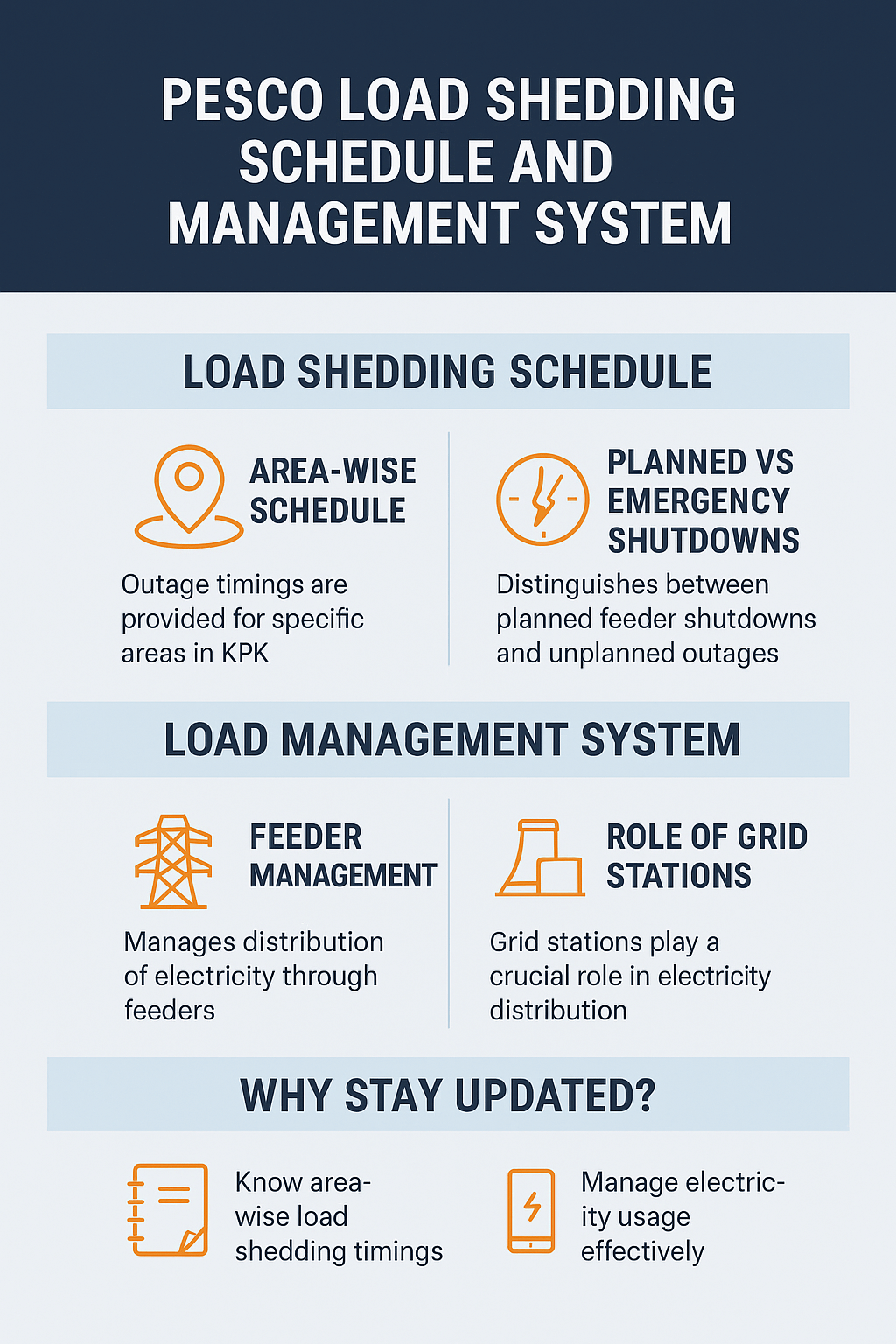
Load shedding is a term every Pakistani is familiar with, especially in regions where electricity demand is higher than supply. The PESCO load shedding schedule is a planned timetable that tells consumers when and where electricity will be temporarily switched off. This system helps PESCO manage the limited power supply more efficiently across its distribution network.
Scheduled vs Unscheduled Outages
-
Scheduled outages are announced in advance and usually happen due to planned maintenance, feeder load management, or grid station upgrades. These power cuts are predictable, making it easier for consumers to adjust their daily activities.
-
Unscheduled outages, on the other hand, occur suddenly due to technical faults, equipment failure, or emergency breakdowns. Since these are not announced beforehand, they often cause more inconvenience.
Understanding the difference between these two types of outages allows consumers to stay prepared and reduce disruption in their daily routine.
Why PESCO Implements Planned Power Shutdowns
PESCO does not cut electricity randomly. The main reasons behind planned load shedding include:
-
Balancing demand during peak hours to avoid system overload
-
Performing maintenance on distribution feeders and grid stations
-
Ensuring the safety of the electricity network during upgrades
-
Preventing large-scale power breakdowns by distributing load fairly
By following a feeder-wise shutdown schedule, PESCO ensures that power supply is managed in a structured and fair way.
Importance for Domestic, Commercial, and Industrial Consumers
The PESCO load shedding schedule is important for every type of consumer:
-
Domestic users can plan essential tasks like water pumping, laundry, or using appliances during available electricity hours.
-
Commercial businesses can schedule working hours to avoid losses during electricity outages.
-
Industrial units rely heavily on power supply, and knowing the planned shutdown timings helps them manage production without unexpected interruptions.
In short, the PESCO load shedding timetable is not just about power cuts – it is about giving consumers control over how they manage their daily lives and work despite electricity shortages.
PESCO Load Management System Explained
Electricity supply is not just about turning the lights on and off – it’s a carefully managed process. PESCO uses a structured load management system to make sure electricity is fairly distributed across its service areas in Khyber Pakhtunkhwa. This system plays a critical role in balancing demand and supply while minimizing sudden breakdowns.
How the Feeder Management System Works
The backbone of PESCO’s load management strategy is its feeder management system. A “feeder” is a power line that carries electricity from a grid station to different neighborhoods, businesses, and industries.
When demand rises beyond the available supply, PESCO temporarily cuts power to specific feeders based on a rotational schedule. This ensures that no single area faces longer outages than others. By dividing electricity fairly, the feeder management system helps in maintaining grid stability and reducing blackouts.
Role of Grid Stations and Distribution Feeders
-
Grid stations act as central hubs where high-voltage electricity is received, stepped down, and then distributed across different feeders.
-
Distribution feeders carry this electricity to towns, villages, and industrial zones.
If one feeder is overloaded, the entire network can suffer. That’s why PESCO continuously monitors grid stations and feeders, shifting loads where necessary to prevent unscheduled outages.
Integration with NEPRA and WAPDA Regulations
PESCO does not operate in isolation. It functions under the guidelines of NEPRA (National Electric Power Regulatory Authority) and in coordination with WAPDA (Water and Power Development Authority).
-
NEPRA sets the rules for fair distribution and ensures consumer protection.
-
WAPDA oversees power generation and transmission, while PESCO focuses on distribution.
This integration ensures that PESCO’s load management system follows national energy policies and provides a transparent way of handling the electricity shortage in Pakistan.
Benefits of the System for Reducing Unscheduled Outages
The load management system may not eliminate outages completely, but it offers several benefits:
-
Reduces the risk of sudden breakdowns and blackouts
-
Ensures a feeder-wise planned schedule instead of random shutdowns
-
Helps consumers prepare for area-wise power outages in advance
-
Provides better balance between domestic, commercial, and industrial users
By organizing load shedding through this system, PESCO minimizes inconvenience and ensures more reliable electricity supply for its consumers.
How to Check PESCO Load Shedding Schedule Online
Gone are the days when consumers had to rely on word of mouth or wait in the dark without knowing when electricity would return. Today, PESCO provides an online system to make it easier for consumers to stay updated about planned outages and feeder-wise shutdown timings. By checking the PESCO load shedding schedule online, you can plan your day and avoid unnecessary disruptions.
Step-by-Step Guide to Access the Schedule
PESCO has made it simple for consumers to get updates about their area’s power supply:
-
Visit the PESCO schedule portal – where outage information is regularly updated.
-
Enter your feeder or area details to view load shedding timings.
-
Use the PESCO mobile app for quick access on smartphones.
-
Subscribe to SMS alerts to receive instant updates on planned outages.
This step-by-step process ensures that consumers can always stay one step ahead of power interruptions.
Area-Wise and Feeder-Wise Outage Timings
One of the most useful features of the system is the area-wise and feeder-wise breakdown of outage schedules. Instead of general information, consumers can see exactly when their feeder or locality will face load shedding. This makes the system more transparent and helps both domestic and commercial users to adjust their schedules accordingly.
Example: Check Today’s PESCO Power Outage Schedule
Imagine you have important work lined up today. By checking the PESCO outage schedule for your area, you can see whether your feeder is scheduled for a shutdown in the morning, afternoon, or evening. For instance:
-
“Feeder XYZ – Power outage from 12:00 PM to 2:00 PM (planned maintenance)”
This kind of real-time information is a huge relief for consumers who otherwise face uncertainty during load shedding hours.
Real-Time Outage Updates
The biggest advantage of the PESCO load management system is the availability of real-time outage updates. Instead of guessing or waiting, consumers can instantly know:
-
If the outage is part of a planned feeder shutdown
-
Whether there is an emergency outage due to technical faults
-
How long the power cut is expected to last
With this system in place, electricity management becomes more predictable, reducing stress and inconvenience for consumers.
PESCO Area-Wise Load Shedding Schedule
The PESCO load shedding schedule is not the same for every location. Since electricity demand and usage vary from one region to another, PESCO divides its power outage timings feeder-wise and area-wise. This ensures a fair distribution of electricity and helps manage the overall load more effectively.
Urban vs Rural Regions in KP
-
Urban areas in Khyber Pakhtunkhwa, such as Peshawar, Mardan, and Abbottabad, usually face shorter but more frequent outages. These cities have a higher concentration of population, businesses, and industries, which increases the demand for electricity.
-
Rural areas, on the other hand, often experience longer power cuts due to limited infrastructure and higher transmission losses. Villages and remote regions may have fewer feeders, which means PESCO has to manage load more carefully to avoid breakdowns.
By tailoring the load shedding schedule for urban and rural areas, PESCO ensures that both regions get their fair share of available electricity.
Consumer Categories: Domestic, Commercial, and Industrial
PESCO also considers consumer categories when planning its load management system:
-
Domestic consumers need electricity for household chores like cooking, water pumping, and studying. Knowing the PESCO outage schedule helps them plan these activities in advance.
-
Commercial consumers, such as shops and offices, depend on uninterrupted power for business operations. Access to an updated schedule allows them to serve customers more efficiently.
-
Industrial consumers require a steady supply of electricity to keep production lines running. Even a short outage can cause delays and financial losses, making the area-wise feeder schedule crucial for industries.
Common Search Term: “PESCO Outage Timing for My Area”
One of the most common questions consumers ask is: “What is the PESCO outage timing for my area?”
This reflects the real need for area-wise load shedding information. With the PESCO feeder-wise schedule, consumers can quickly find out the exact timing of planned outages in their locality and avoid unnecessary disruption.
Planned Shutdowns vs Emergency Power Outages
Not every power cut is the same. Some are planned in advance, while others happen unexpectedly. Understanding the difference between a scheduled feeder shutdown and an emergency outage helps consumers manage their day better and reduces confusion when electricity goes off.
Planned Feeder Shutdown Notice
A planned shutdown is announced beforehand and usually takes place for specific reasons, such as:
-
Routine maintenance on distribution feeders
-
Upgrading equipment at grid stations
-
Balancing electricity load during peak hours
Since these outages are scheduled, consumers receive prior notice through the PESCO load shedding timetable. This allows households, businesses, and industries to prepare for the downtime in advance, making it less disruptive.
Maintenance-Related Outages
Planned shutdowns are often necessary to keep the electricity distribution system safe and reliable. For example:
-
Replacing old or damaged wires
-
Testing transformers and other equipment
-
Preventive checks to reduce the risk of future breakdowns
Though inconvenient, these maintenance-related outages are crucial to avoid bigger and longer blackouts later.
Emergency Outages Due to Faults, Overload, or Grid Issues
Unlike planned shutdowns, emergency outages occur without warning. They are usually caused by:
-
Sudden faults in feeders or transformers
-
Overloading due to high electricity demand
-
Technical issues at the grid station
-
Weather-related damage to power lines
Since these outages are unannounced, they can be frustrating for consumers. However, PESCO works to restore electricity as quickly as possible whenever an emergency shutdown occurs.
PESCO Customer Support for Load Shedding Queries
For many consumers, power outages can be frustrating—especially when they don’t know whether the outage is part of the PESCO load shedding schedule or caused by a sudden fault. That’s why PESCO has set up multiple customer support services to keep people informed and make it easier to lodge complaints.
PESCO Helpline Number for Complaints
If you are facing an electricity issue, you can call the PESCO helpline number to register your complaint. Whether it’s about unscheduled load shedding, billing errors, or technical faults, the helpline connects you directly to PESCO’s support staff. This quick communication channel helps consumers get updates and track the status of their complaints.
Online Complaint Registration System
To make the process more convenient, PESCO also offers an online complaint registration system. Instead of waiting in queues or making repeated calls, consumers can simply fill out a form online with their reference number and complaint details. This system not only saves time but also makes it easier for PESCO to resolve issues efficiently.
SMS Alerts & Notification System
One of the most useful features for consumers is the PESCO SMS alert system. By registering their mobile number, consumers can receive:
-
Load shedding notifications for planned feeder shutdowns
-
Updates about emergency outages
-
Confirmation of complaint status
This way, consumers stay updated about their electricity supply without having to constantly check online.
PESCO Mobile App Features
PESCO has also introduced a mobile application to make customer service more accessible. Through the app, consumers can:
-
Check the PESCO load shedding schedule
-
Register complaints instantly
-
Track the status of electricity outages in real-time
-
Access billing details and payment options
With these features, the mobile app acts as a complete hub for managing electricity-related concerns.
By offering multiple support channels—helpline, online complaints, SMS alerts, and a mobile app—PESCO ensures that consumers stay connected and informed, even during planned or emergency power outages.
NEPRA & WAPDA Role in Load Shedding Management
When it comes to managing electricity in Pakistan, PESCO does not work alone. Two major authorities—NEPRA (National Electric Power Regulatory Authority) and WAPDA (Water and Power Development Authority)—play a vital role in how load shedding is planned, regulated, and implemented. Their policies and operations directly affect the way PESCO manages its electricity supply in Khyber Pakhtunkhwa.
Regulatory Authority (NEPRA) Policies
NEPRA is the regulatory authority responsible for setting policies, tariffs, and performance standards for all distribution companies, including PESCO. Its main roles include:
-
Approving electricity tariffs and consumer categories
-
Setting rules for fair distribution of electricity
-
Monitoring service quality and addressing consumer complaints
-
Ensuring transparency in load shedding management
By enforcing these policies, NEPRA ensures that PESCO carries out its load shedding schedule in a structured and consumer-friendly manner.
WAPDA’s Role in Electricity Generation and Transmission
While PESCO is in charge of electricity distribution, WAPDA handles the generation and transmission of power across Pakistan. WAPDA oversees:
-
Hydropower plants and water reservoirs
-
National transmission lines delivering electricity to distribution companies
-
Long-term planning for energy resources
Without WAPDA’s generation and transmission network, PESCO would not be able to receive and distribute electricity to its consumers in KP.
How Regulations Impact PESCO’s Electricity Supply Management
The policies set by NEPRA and the power generated by WAPDA directly shape how PESCO manages its consumers. For example:
-
If power generation is low, PESCO must adjust its load management system to avoid grid overload.
-
NEPRA’s consumer protection guidelines ensure that area-wise load shedding schedules are published transparently.
-
National policies encourage fair distribution, so both urban and rural consumers get equal consideration.
In short, while PESCO is responsible for implementing the load shedding schedule, its framework is guided by NEPRA’s rules and dependent on WAPDA’s electricity generation capacity.
FAQs
How can I check today’s PESCO load shedding schedule?
You can easily check today’s PESCO load shedding schedule by entering your feeder or area details in the online system or mobile app. The schedule provides real-time outage updates so you know exactly when your electricity will be switched off and restored.
Is the PESCO load shedding schedule area-wise?
Yes, the PESCO load shedding timetable is updated area-wise and feeder-wise. This means every consumer can see the specific outage timings for their neighborhood or region instead of relying on general information.
What is the difference between planned and unplanned outages?
-
Planned outages are announced in advance for maintenance, feeder upgrades, or system balancing.
-
Unplanned outages happen suddenly due to faults, overload, or weather-related issues.
Knowing the difference helps you understand whether your outage is part of the official PESCO schedule or an emergency breakdown.
Can I get SMS alerts for PESCO power cuts?
Yes, PESCO offers an SMS alert system that sends notifications about planned feeder shutdowns and emergency outages. By registering your mobile number, you can stay updated on power interruptions without having to manually check the schedule every time.
Which areas of KP are most affected by load shedding?
Load shedding in Khyber Pakhtunkhwa varies depending on electricity demand, losses, and infrastructure.
-
Urban areas like Peshawar and Mardan often face shorter but frequent outages.
-
Rural areas and remote villages may face longer cuts due to limited feeder capacity.
Checking the PESCO feeder-wise schedule ensures you know the exact timings for your own area.
Conclusion
Managing electricity in Khyber Pakhtunkhwa heavily depends on the PESCO load shedding schedule. With the help of feeder management systems, grid stations, and regulatory support from NEPRA and WAPDA, PESCO tries to balance supply and demand while minimizing unscheduled breakdowns.
For consumers, the key is to stay updated. Whether through the PESCO online schedule, mobile app, feeder-wise notices, or SMS alerts, being informed helps you adjust your daily routine and avoid unnecessary disruption.
⚡ Call-to-Action: Check your PESCO load shedding schedule today to manage electricity usage effectively and stay one step ahead of power outages.